5 Interior Design Portfolio Examples and Tips to Build Yours
Interior decoration and planning is a competitive profession, where success depends on the ability to present your work effectively. Creating a portfolio is a key step for every designer, as it serves as a business card and demonstrates your skills to potential clients. Stanford Web Credibility Project study proves that 75% of people judge an expert by the appearance of their website.
Having a professional digital portfolio makes it easier for clients to find you and connect with your work. From my experience, even a few well-presented projects can spark interest and open doors to new opportunities. Let’s check out some selected examples of interior design portfolios and see how you can create one that drives your business.
Contents
What is an interior design portfolio?
A portfolio website is a well-structured collection of your best projects that highlights your unique style, approach, and expertise. Most designers present their portfolios online, allowing potential clients and employers to easily explore their work and get a clear sense of their skill level in one place.
What makes professional examples of interior design portfolio
A successful web hub should be structured, visually appealing, and easy to navigate. High-quality content and thoughtful design will grab the attention of potential clients and leave a lasting impression. Based on my selected interior design portfolio examples, here’s what you should have:
1. Visual style
First impressions matter. Your website should look modern, clean, and reflect your aesthetic. Choose fonts, colors, and layouts that align with your style to create a cohesive visual identity.
2. Bio
A brief introduction will help visitors understand who you are and what experience you have. Mention your education, specialization, and achievements. Keep it clear and concise, avoid unnecessary details that might overwhelm readers.
3. Completed projects
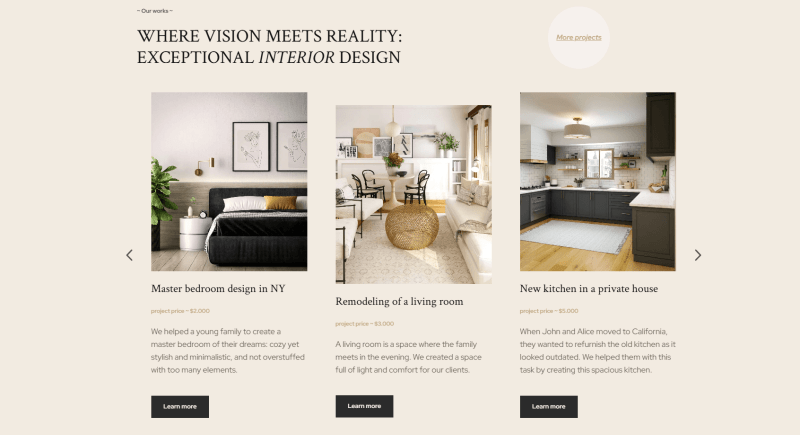
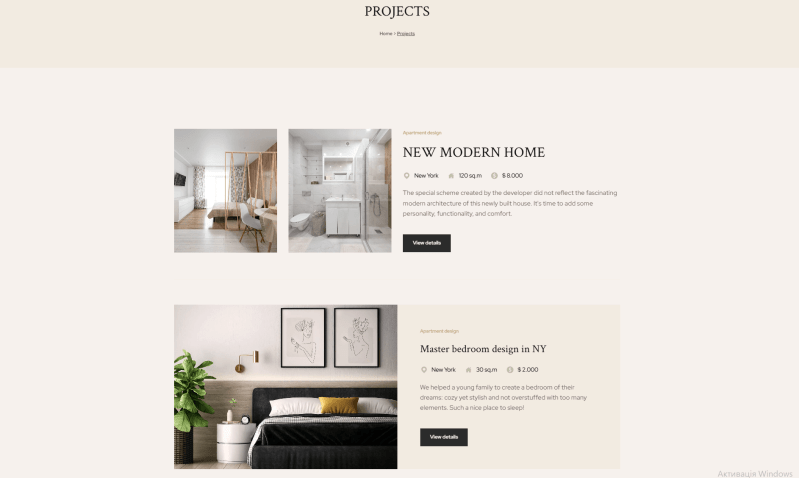
This is the heart of your portfolio. Showcase well-lit photos from the best angles to capture the atmosphere of each space. Explain your concept, the materials and styles used, and the challenges you solved.
4. Renders and sketches
If you’re still building your portfolio, renderings and sketches are a great way to show your skills. They illustrate your ability to develop concepts, visualize ideas, and use design software effectively.
5. Testimonials
Honest client feedback builds trust and credibility. Short, specific testimonials that highlight your professionalism, attention to detail, and ability to deliver results can make a big difference for potential clients.
6. Contacts
Make it easy for clients to reach you. Include your email, phone number, and links to social media profiles where they can explore more of your work. Clear and accessible contact information encourages inquiries and opens opportunities.
How to make an interior design portfolio
Building an effective website requires thoughtful presentation. Below are the key steps to сreate an interior design portfolio.
1. Identify your target audience
Before you start creating an interior design portfolio, think about who will be viewing it. If your focus is on private clients, highlight style, comfort, and functionality in residential spaces. If you’re targeting studios, developers, or contractors, show your ability to handle large-scale projects and use modern design tools efficiently.
2. Choose the right platform
Your portfolio should be easy to share and accessible across devices. Using a website builder like Weblium is a smart choice. It allows you to create a professional-looking site quickly with ready-made templates and ensures your portfolio is fully mobile-friendly.
3. Select your best works
Quality beats quantity. I recommend never overloading your portfolio with all your projects. Choose 7-10 of your strongest pieces. If you’re just starting out, include renderings, sketches, or concepts that demonstrate your creativity and technical skills.
4. Organize the content
An easy-to-navigate website makes browsing enjoyable and intuitive. Organize projects into clear categories. For example, residential vs. commercial, or by style such as modern, minimalistic, or classic. Consider adding a section for drawings, 3D visualizations, or process shots to show your full workflow.
5. Use high-quality photos
Photos are the foundation of your portfolio. Ideally, you should invest in professional photography or ensure your images have proper lighting, composition, and clarity. Avoid blurry, dark, or overly cluttered images, as they can undermine your credibility.
6. Add descriptions and technical details
Beautiful photos are not enough. A short but informative description should accompany each project. Indicate what tasks you faced, what decisions were made, and what materials were used. This allows everyone to assess your approach and level of expertise.
7. Publish and share
Once ready, publish it online and make it accessible to everyone. Owning a domain name helps establish your brand and makes it easy for clients to find you. Don’t forget to share your portfolio via social media, newsletters, and professional networks to maximize visibility.
Tips for creating a professional interior design portfolio
To create an interior design portfolio and catch the attention, it is crucial not only to compose it correctly but also to follow certain guidelines. Below are some essential tips I summarized from my list of top-5 selected interior design portfolio examples:
- Focus on minimalism
Simply keep your pages clean. Avoid excessive text, flashy decorations, or overly bright colors that distract from your work. The focus should be on high-quality images of your projects. I recommend using simple fonts, subtle backgrounds, and concise layouts. That looks modern and professional.
- Keep it updated
Your portfolio should reflect your current work and style. If visitors see outdated projects or notice that it hasn’t been refreshed in years, they might assume you are no longer active. Regularly add new projects to demonstrate your availability and growth.
- Optimize your website
Ensure your site loads quickly, displays correctly on all devices, and is easy to navigate. Since most people browse on smartphones, responsiveness is crucial. For better visibility, don’t forget SEO essentials like meta titles, descriptions, and alt texts for images. Tools like Weblium make this easy, even for beginners.
- Add case studies
Case studies with real challenges and your solutions show your versatility and problem-solving skills. That’s why I recommend demonstrating not only the finished result. Include before-and-after shots, sketches, renderings, and project concepts. Sharing your workflow helps potential clients understand your thought process and design approach.
- Simplify communication
Make it easy for clients to reach you. A simple contact form can help collect inquiries in one place, making sure you never miss a potential project. Platforms like Weblium integrate these forms seamlessly. So, even if you’re just starting, make sure to set clear ways of communication first and foremost.
My 5 selected examples of interior design portfolio websites
1. Interior Design
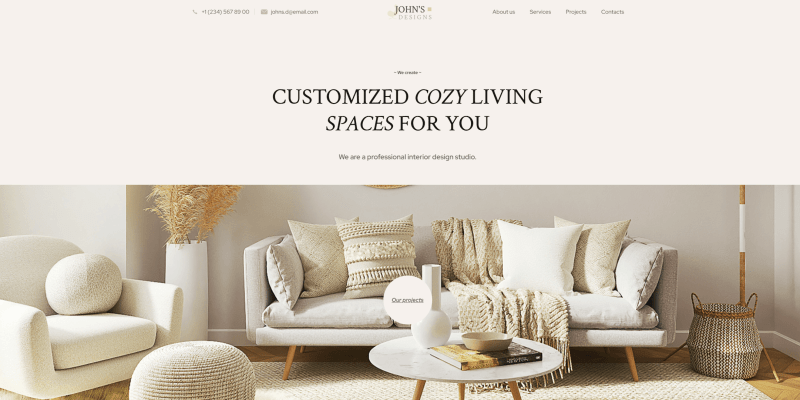
One of my favorite interior portfolio examples, this template combines a clean layout with a smooth user experience. The homepage guides visitors through all the important sections (showing expertise, client reviews, and more) without feeling overwhelming.
The About Me/Us page shares achievements in numbers, explains the mission, and walks through the creative process. It feels like you’re really getting to know the team. The request form looks super simple. The FAQ section is also very clear, giving potential clients the info they need and contributing to the website’s search optimization.
2. Interior Designer
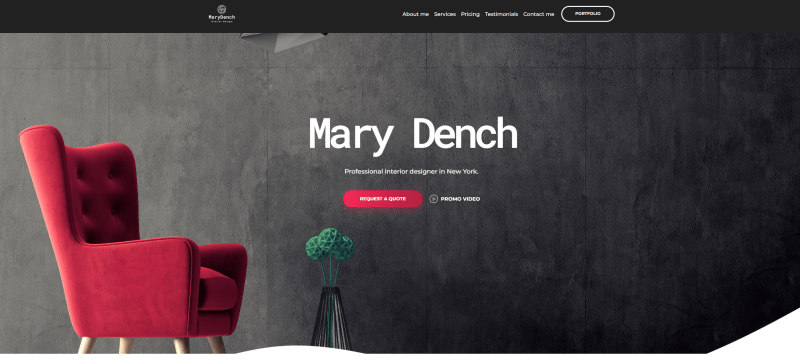
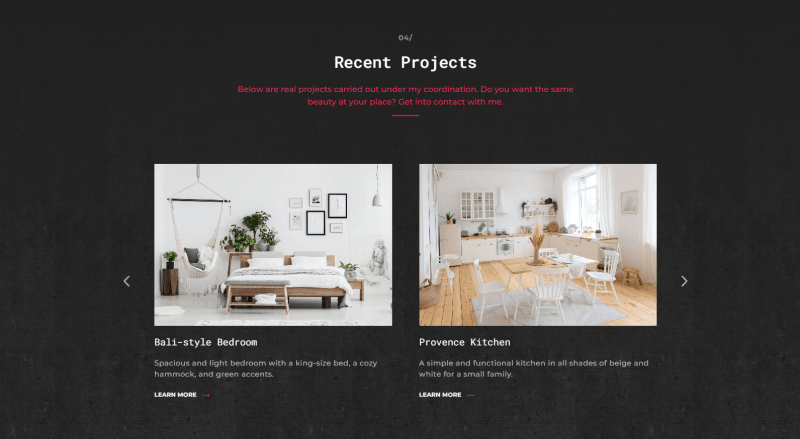
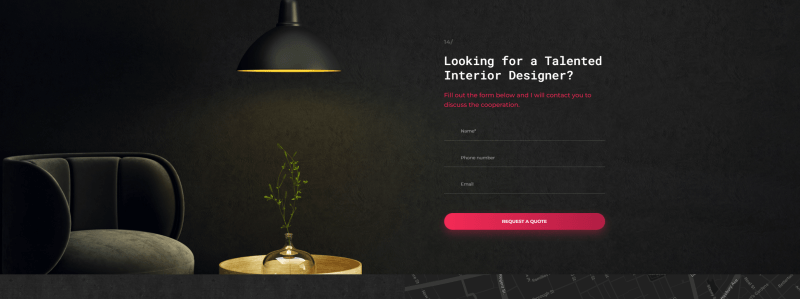
This design blends modern concepts with simple yet unique details. From the unconventional shapes on the cover to the icons that highlight key elements, it immediately grabbed my attention.
The gallery lets you explore each interior in detail. And I find the pricing block super clear, it shows rates along with features at a glance. The interactive map and contact info make it easy for anyone to get in touch. This layout can work perfectly for a variety of needs, whether you’re a student building a portfolio or a studio presenting professional projects.
3. Annie Downing
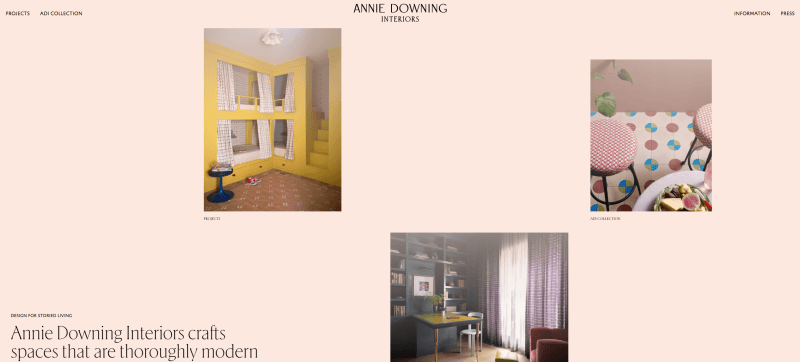
I love how Annie Downing manages to mix timeless elegance with a contemporary touch. Her work really emphasizes originality and individuality, giving each project a distinct personality. The designs feel both stylish and practical, perfect for a variety of spaces.
What I find really engaging is the smooth transitions and hover effects. They make browsing the site feel dynamic and inviting.
4. Leandra
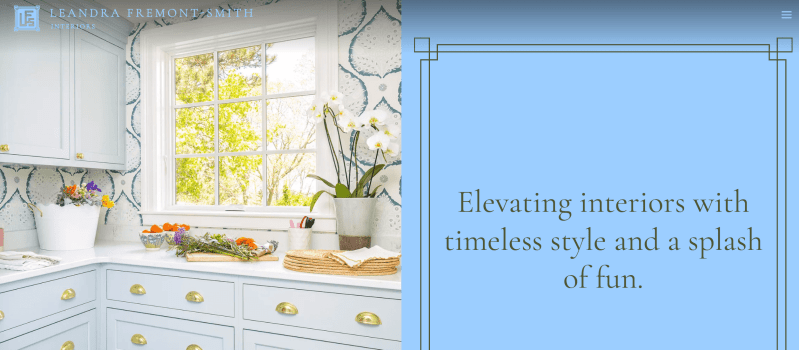
Leandra Fremont-Smith isn’t afraid to use bold colors and playful patterns. Yet everything still feels elegant and livable. Her spaces reflect the personalities of her clients, which makes this interior design portfolio example feel personal and relatable.
What stands out to me is how the website itself mirrors her case studies (the style, the colors, the layout). This makes everything look consistent. Plus, the subscription field is a nice touch, letting visitors stay updated.
5. Two Designers
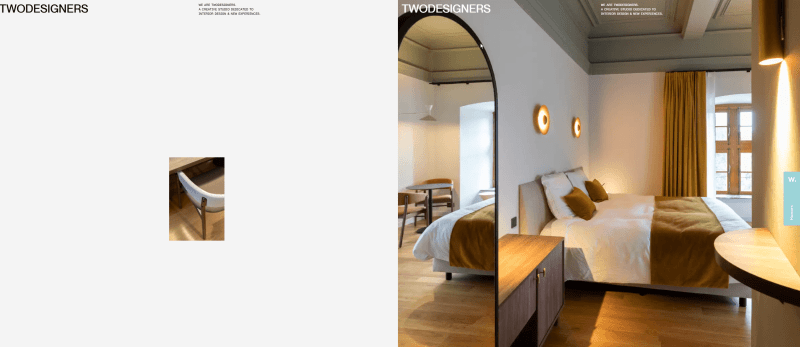
This portfolio balances creativity with strategy. And the work isn’t just pretty, it’s smart, functional, and full of thoughtful details, from office layouts to custom furniture concepts.
The bright blue accents pop against the neutral palette, and I love that each project has its own dedicated page. You can easily explore every detail and see how they think through every space.
Bottom Line
Now you can create your own interior design portfolio, which will help to attract new clients and build up a long-lasting online presence. Try Weblium to quickly build a modern website using pre-made templates, customizable contact forms, and built-in SEO tools.
Interior design portfolio FAQs
What is the best platform for an interior design portfolio?
I’d recommend Weblium. It has free, ready-made templates, an intuitive editor, and built-in SEO tools to help present any work professionally. Plus, all website designs are mobile-responsive and easy to update.
How many pages should an interior design portfolio be?
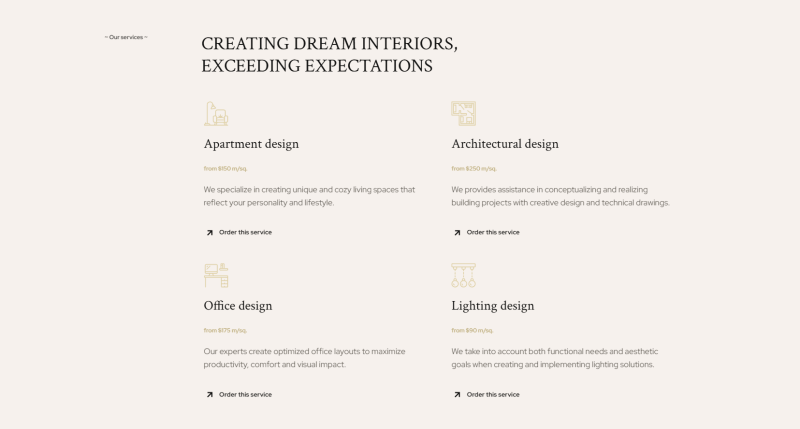
A well-structured portfolio usually has around five pages. The Home page introduces the brand and design philosophy. The Gallery showcases your projects with high-quality images. The About section shares your bio and expertise. The Services page shows offerings, and Contacts makes it simple for potential clients to get in touch.
What is the easiest way to create an interior design portfolio?
Go for Weblium’s no-code website builder. You just need to pick a free template, add your branding and images, and publish your portfolio in just a few clicks. No technical skills or web design experience required.