What Is a Quiz in Targeted Ads and Why It Works So Well
In targeted ads, success depends not only on your ad setup but also on what happens after the click. And this is exactly where many businesses miss out on leads – people visit the landing page but don’t convert.
A quiz can change that. It transforms a simple page visit into an engaging, interactive experience, helping you capture more leads from the same traffic.
Contents
Quiz Landing Pages vs. Traditional Ads
A quiz landing page is an interactive experience built around a sequence of questions, guiding users step by step through a structured flow.
Unlike standard ads that lead users to static pages, quizzes immediately turn passive visitors into active participants. Users don’t just scroll. They interact, answer, and move through the funnel.
Personalization is another major advantage. Quizzes deliver tailored results based on responses, while traditional landing pages offer the same message to all users. To see the difference in action, let’s explore two lead generation scenarios.
Scenario 1 (classic approach)
You add a regular lead form to your site, and the user leaves their contact details. Then a manager steps in and calls the client to understand their needs and collect the missing information. Usually, this takes at least two calls – one for gathering details and another for presenting the offer.
The problem is that between these steps, the client can easily lose interest, delay the decision, or go to a competitor.
That directly reduces your chances of closing the deal.
Scenario 2 (with a quiz)
Instead of a simple form, you offer users to take a quiz. While answering questions, they naturally provide the same information your sales manager would normally collect over the phone.
As a result, you get a “warm” lead with clear insights into their needs. This lets you skip unnecessary steps and go straight to a relevant offer from the very first interaction.
You save time and significantly improve your chances of closing the deal.
How Quizzes Work in Targeted Ads
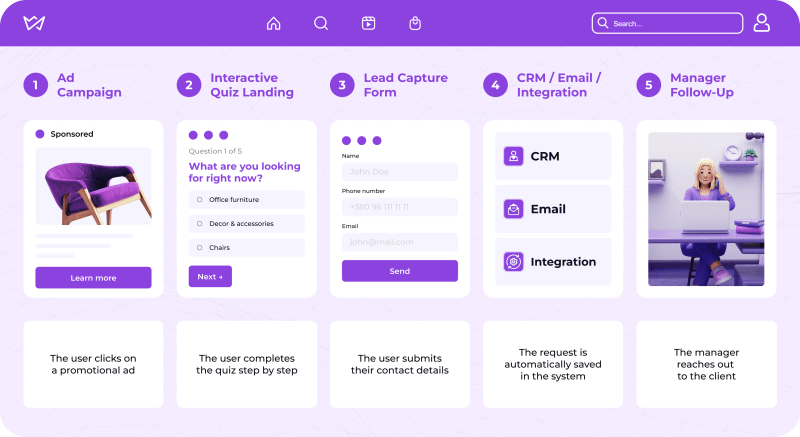
The flow is quite simple:
- Users see your ad on platforms like Facebook or Instagram
- They click on it and are taken to a quiz instead of a regular landing page
- The first screen explains what they’ll get after completing the quiz
- They answer a few easy questions (usually 3-7) and gradually get more involved
- The experience feels more like a conversation than a traditional landing page
- At the end, they’re shown a form to leave their contact details
- They submit their information to receive the result, recommendation, or consultation
- The lead is then passed on to a manager for follow-up.
This guided flow replaces a static browsing experience. That’s what drives higher conversions.
Why a Quiz Outperforms Traditional Landing Pages
Unlike standard landing pages, where users just consume information and often leave without taking action, quizzes actively involve them. This interaction makes a big difference in performance. While typical landing pages convert at around 4–7%, well-designed quizzes can achieve completion rates of 40–55% (MarketingLTB).
The reason is simple – engagement. When users interact, they’re more likely to stay and finish the process.
Another key factor is built-in segmentation within the funnel. You immediately collect data about the user and their needs, rather than receiving a “cold” lead.
Quizzes also work because of psychology. Each answer creates a small commitment, making users more likely to continue and complete the flow.
In the end, a quiz can help you get more leads from the same budget, improving both efficiency and overall campaign performance.
Best Use Cases for Quiz Funnels
A quiz funnel can be especially effective in industries where customers can’t make a quick decision and need help choosing the right option. If your product or service includes different variations, settings, or use cases, quizzes make the decision process easier and boost conversions.
Best-performing niches include:
Website development. Helps define the project type, budget, and features while qualifying the lead.
Real estate. Simplifies the process of finding a property based on budget, location, and preferences.
E-commerce. Recommends the best product fit based on user preferences.
Online education. Helps users find the right course based on their level and goals.
Beauty. Offers personalized product or treatment recommendations.
Fitness & wellness. Creates tailored workout or nutrition plans.
Interior design and renovation. Helps quickly assess needs like style, space, and budget.
In these cases, the quiz doesn’t just collect contacts. It guides users toward a relevant solution. That’s why quizzes perform especially well in industries where personalization and guidance are important.
What a Quiz Looks Like and How It Works
A well-structured quiz acts like a soft sales funnel. Instead of pushing users to buy, it gradually leads them toward leaving their details. That’s why every screen matters, from the very first to the final step.
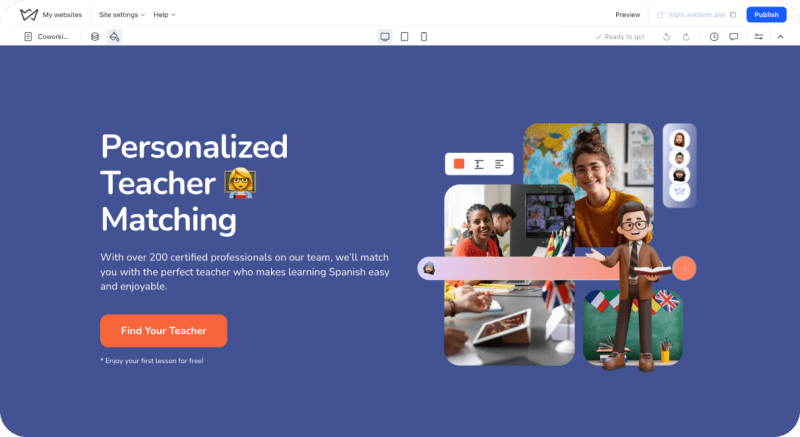
Step 1. The Opening Screen
This is where you need to grab attention and clearly explain why it’s worth spending a minute or two on the quiz. The key here is to be specific and outcome-focused.
- Start with a short, clear headline and a simple explanation
- Replace generic phrases like “Find out more” with something actionable: “Get a price estimate in 1 minute”
- Avoid long blocks of text
- Use visuals or images to support your message.
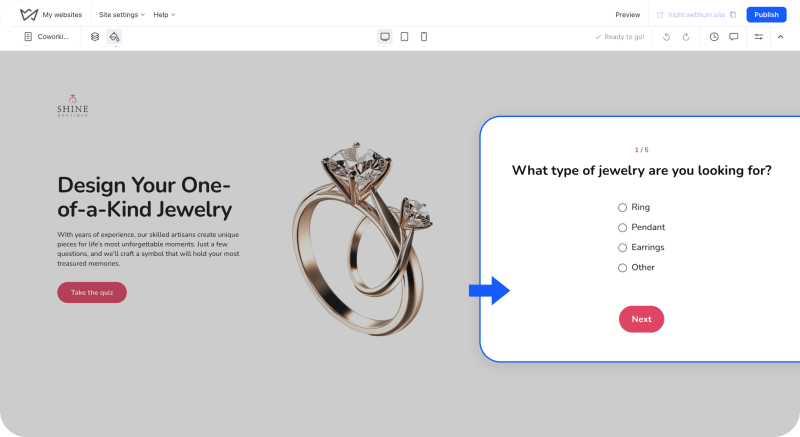
Step 2. The Question Flow
Once users start the quiz, they should be guided through a clear and simple flow. Usually, 3-7 questions are enough, depending on your niche. If the quiz is longer, you’ll need to motivate users more to complete it.
- Begin with easy questions to warm users up
- Add a progress bar like 1/7, 2/7 to keep them engaged
- Use multiple-choice answers instead of free-text input
- Include an “I don’t know” option when it makes sense.
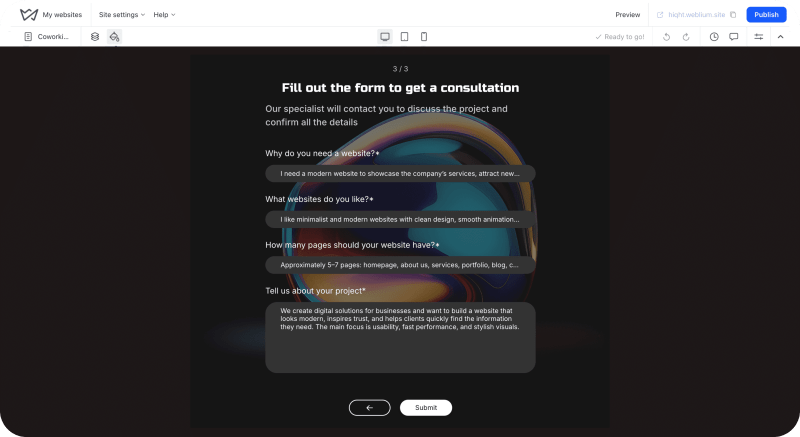
Step 3. Lead Capture Form
The form should feel like a natural ending to the quiz. Since users are already engaged, you don’t want to break the flow with too many fields or complicated text.
- Remind users why you need their contact details
- Keep the form as short as possible
- Add a simple note like: “We’ll send the result to your phone”
- Boost motivation with a bonus, consultation, or personalized offer.
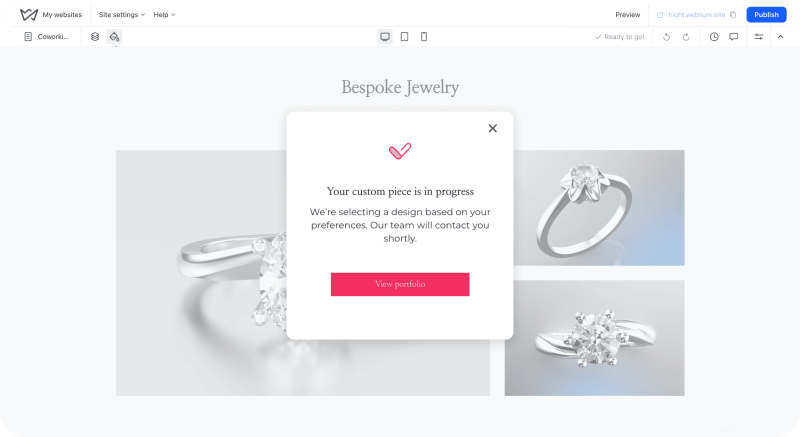
Step 4. The Final Screen
The thank-you screen is more than just a confirmation. It completes the whole experience. It also reassures the user that everything went through and gives a feeling of closure.
- Thank users for their submission
- Let them know when to expect a response
- Add a simple message like: “We’re already working on your request”
- Optionally, suggest visiting your website or following your social media.
How to Easily Build a Quiz for Targeted Ads
You don’t need a developer or complex integrations to create a quiz for lead generation. You can build one yourself in just a few hours. With Weblium, there’s a ready-to-use quiz builder that lets you add an interactive section to your site, create a separate page, or build a dedicated landing page for your ad traffic.
Just pick a structure, add your questions, and set up the lead form – and your quiz is ready to go. Everything is already optimized for mobile, so users can easily complete it from their phones. All responses are saved in one place, making lead management much easier.
Conclusion
A quiz in targeted ads is a great way to turn regular traffic into a structured lead funnel. Rather than trying to persuade users with static content, you guide them step by step toward a clear result.
This works especially well when users need help choosing or expect a more personalized experience. That’s why quizzes often deliver higher conversions and lower cost per lead. And with modern builders, you can launch a quiz quickly without complicated setup or extra costs.