Weblium vs Wix vs Squarespace: Which Website Builder Wins?
Choosing a website builder is easier when you know what you’re comparing. Wix, Squarespace, and Weblium can all help you create a professional website without coding, but they differ in pricing, customization, templates, business features, and support.
Contents
TL;DR
- Wix, Squarespace, and Weblium offer customizable templates, eCommerce features, and a range of plans
- Wix is a famous drag-and-drop website creator with the most significant number of templates and apps
- Squarespace is more suitable for creating an “artsy” portfolio or site
- Weblium focuses on the ease of use, templates, mobile-friendly layouts, and 24/7 human support.
In this website builder comparison, we’ll look at all three platforms across seven criteria:
- Pricing
- Ease of use
- Functionality
- Template design
- SEO
- eCommerce
- Customer support.
We’ll also examine Weblium reviews, explain the differences between free access and paid plans, and help you decide which platform fits your needs and budget.
Wix vs Squarespace vs Weblium: Overview
Here is a detailed comparison table and a review of each builder based on its most important features!
| Wix | Squarespace | Weblium | |
| Pricing | From $17, a free plan | From $12 | From $11, a free plan |
| Ease of use | Powerful interface, many tools | Design-centric approach, stable | Intuitive interface, simple |
| Functionality | A lot of features and apps (App Store) | Structured interface and integrations | Effortless editor and integrations |
| Templates | 900+ | 150+ | 300+ |
| SEO | Google Search Console | Squarespace Analytics | Google Search Console |
| E-commerce | Advanced business features | Powerful features for small business | Fast and easy tools for online stores |
| Support: | 24/7 (email) | 24/7 (email) | 24/7 (email/live chat) |
1. Pricing: Which website builder offers the best value?
Price comparisons can be misleading if you look only at the lowest advertised monthly rate. A plan might include the features you need, or you might have to upgrade to connect a domain, remove branding, accept payments, or access advanced business tools.
Let’s compare Weblium pricing, Wix pricing, and Squarespace’s subscription options.
Wix Pricing

The Wix website builder offers a permanent free plan and several paid subscriptions. The free plan is useful for experimenting with the editor, but it comes with Wix branding and a Wix-branded website address.
Paid plans unlock features such as connecting a custom domain, additional storage, and business tools. Ecommerce and other advanced capabilities depend on the plan you choose.
Squarespace Pricing

Squarespace doesn’t offer a permanent free plan, but you can try the platform with a 14-day free trial. Squarespace includes hosting and offers free domain registration for the first year with eligible annual subscriptions.
Higher-tier plans add capabilities for marketing, selling, and managing an online business.
Weblium

The Weblium website builder offers a limited free subscription alongside paid Starter and Business plans. New users can also try paid features during a 14-day trial.
Is Weblium free? Yes, but it’s important to understand how Weblium pricing works. The Weblium free plan has limitations, and some business features require a paid subscription. The trial lets you test selected paid features before deciding whether to upgrade.
Pricing verdict: The cheapest website builder for your project depends on which features you need and how you plan to pay.
- Weblium is worth considering if you want a straightforward business website at an accessible annual price
- Wix makes sense if you need its wider range of apps and business tools
- Squarespace is a strong option if its design and content features justify the cost for your project.
2. Ease of use: Which website builder is easiest for beginners?
All three platforms let you create a website without writing code. The difference is how much you need to learn before you can build and manage your site comfortably.
Wix
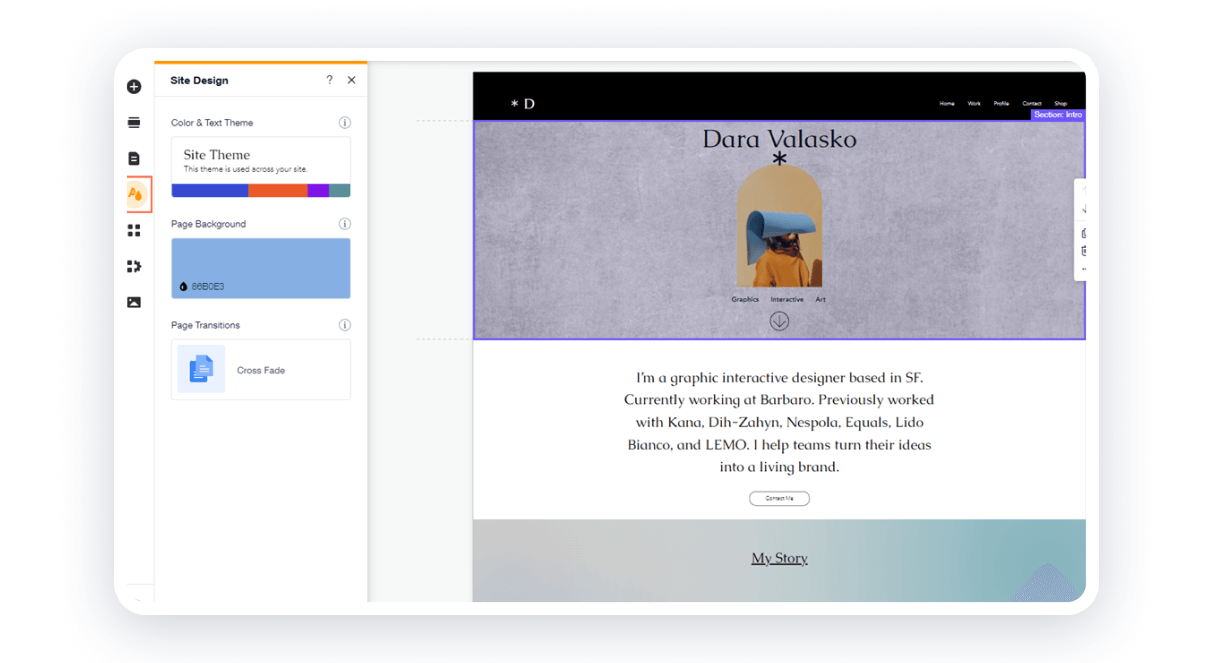
The Wix editor offers extensive customization options. You can arrange elements, adjust layouts, add apps, and build different kinds of websites. This flexibility is useful, but it also means more choices to navigate.
The Wix editor may take beginners longer to learn, especially if they want to explore advanced design controls and integrations. Users who prefer a more guided workflow may find that all the available options create an additional learning curve.
Squarespace
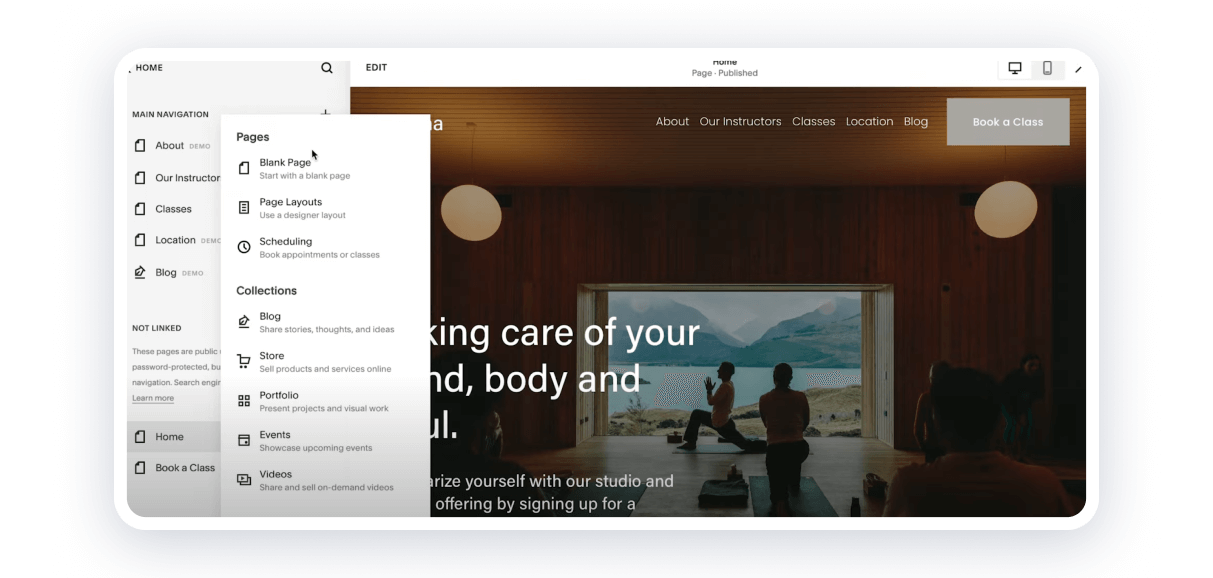
Squarespace uses a more structured, design-focused editing experience. Its layouts and styling tools help maintain a consistent visual identity, making it appealing to people who care about presentation.
However, users who want unrestricted control over individual elements may need time to understand its editing approach and layout rules.
Weblium
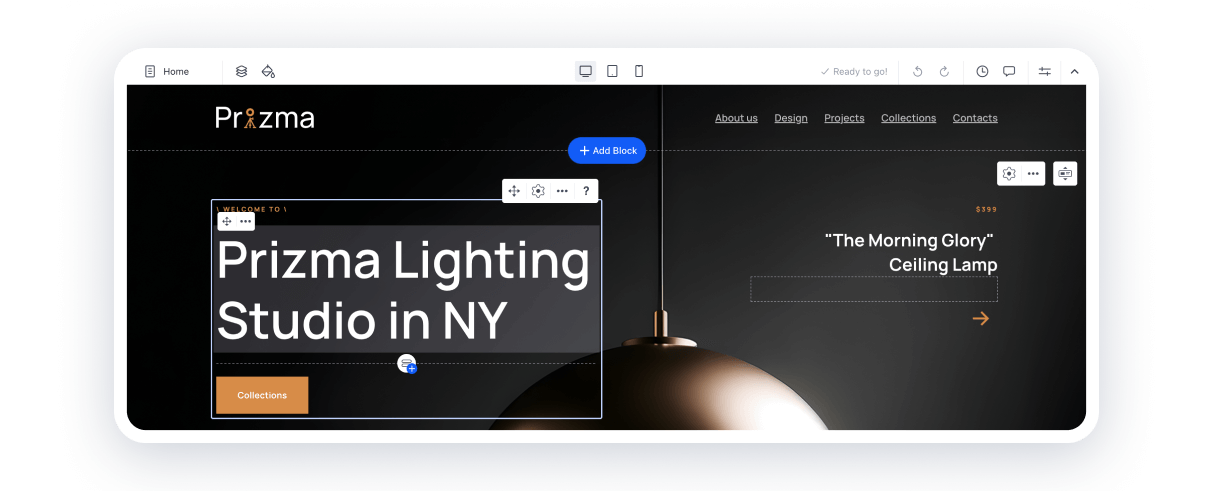
The Weblium website builder is built around a visual editor, ready-made blocks, and a guided website-building process. You can choose a template, replace the demo content, adjust colors and fonts, and add sections without configuring every element individually.
Its approach works well for people who want to launch a business website without spending time learning a complex editor. You can also use the Weblium AI website builder to generate a starting point and refine the result yourself.
The trade-off is that a more structured editing experience may feel limiting if you want a highly unusual layout.
Ease-of-use verdict: For beginners looking for the best no code website builder, the most useful question is how easily you can complete your everyday tasks (not how many settings are available).
- Weblium is a strong choice if you want a simple process and a quick route to a professional-looking business website
- Wix is for those who prefer flexibility and don’t mind learning more tools
- Squarespace works well for users who want extensive design experience.
3. Functionality: Which website builder has the most features?
The best website builder isn’t necessarily the one with the most features. It’s the one that provides the tools your website needs without making everyday tasks unnecessarily complicated.
Wix

Wix has the broadest app ecosystem of these three platforms. Its App Market offers a wide range of first-party and third-party apps that extend a website with booking systems, marketing features, business management tools, and other specialized functionality.
This is a major advantage if your website needs a specific integration or a feature that isn’t built into the platform.
The downside is that more tools can mean more setup, more settings to manage, and potentially additional costs. These are important Wix pros and cons to weigh against its flexibility.
Squarespace
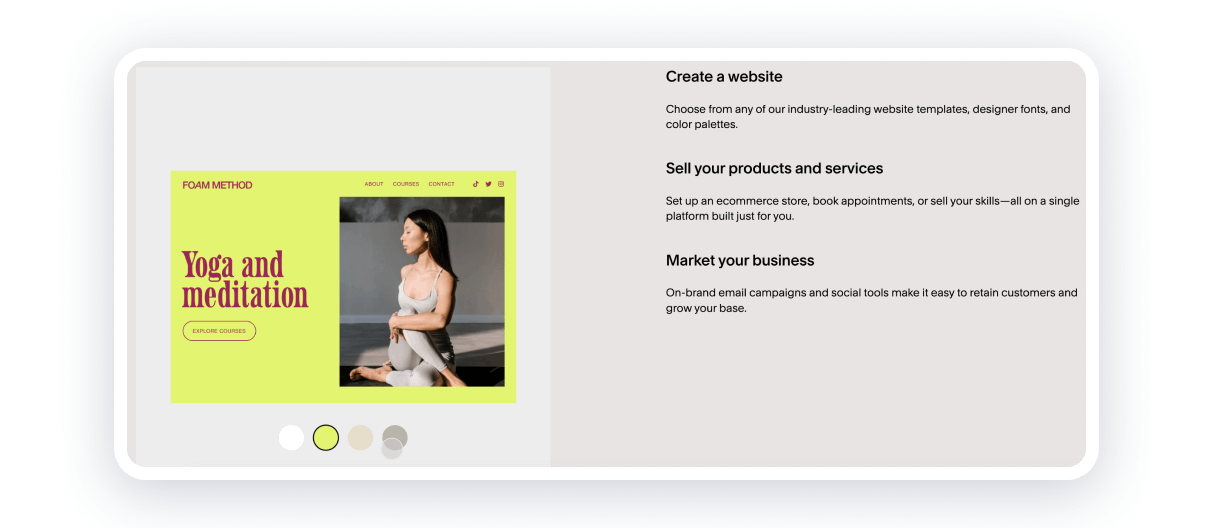
Squarespace combines website building with built-in tools for blogging, content management, marketing, memberships, and online sales. Its integrated approach is especially useful for creators and businesses that want to manage their content and visual presentation in one place.
It’s less about providing an enormous app marketplace and more about offering a coordinated set of features that work within the Squarespace environment.
Weblium
Weblium covers common small-business needs with contact forms, lead-generation tools, integrations, design controls, AI-assisted features, and ecommerce on the Business plan. You can build landing pages, service websites, company websites, and online stores without assembling a complicated stack of separate tools.
The Weblium website builder has:
- The perfect site templates for your niche, created based on its in-depth analysis
- Free images
- Built-in integrations for business
- Intuitive drag-and-drop editor
- SEO tools
- Fast page load time
- Website design that looks perfect on any device and in any browser
- Reliable Google Cloud hosting
- 24/7 live human support.
For agencies and freelancers, Weblium also supports transferring a website to a client’s account. The transfer process helps simplify project handover, and you can remain a contributor if the client wants ongoing help.
Functionality verdict: The main differences come down to the range of available features, integration options, and how each platform supports your business needs.
- Wix is the best choice when you need a large app ecosystem or specialized integrations
- Squarespace suits content-led projects and businesses that value integrated publishing tools
- Weblium has the essentials for many small businesses and offers a more focused workflow.
4. Design templates: Which builder makes it easier to create a professional website?
A good template gives you more than attractive colors and images. It provides a useful page structure, clear visual hierarchy, and a starting point that you can adapt to your business.
Wix
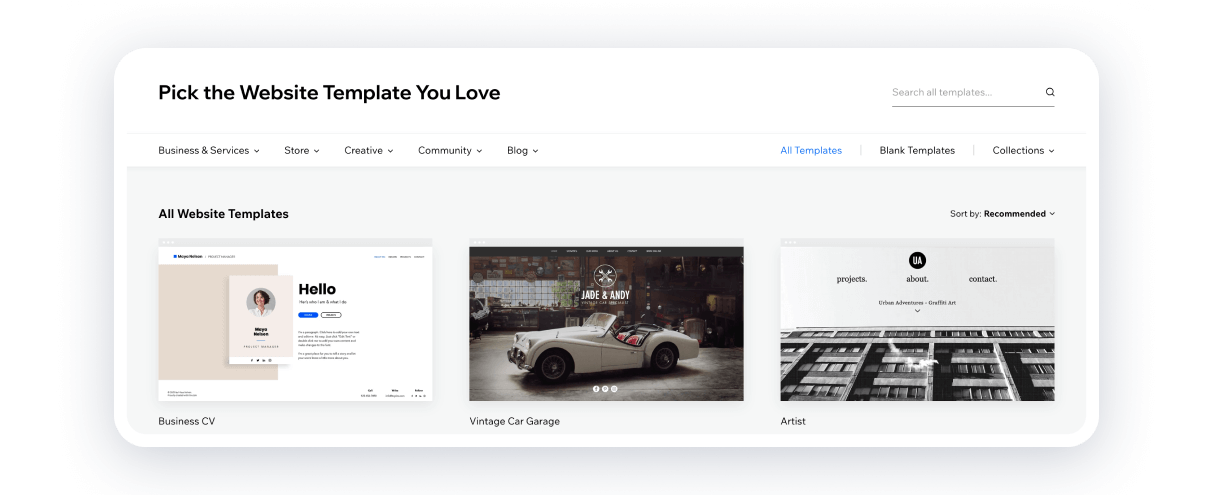
Wix has a large template selection covering many industries and website types. Its editor gives you considerable freedom to customize the initial design, which can be valuable if you want a distinctive layout.
Wix Arena is another exciting feature. This is a community of designers that has evolved around the system. You can check out their portfolios and order specific services. You can also request services by filling out a detailed questionnaire, after which the system will give you a list of the best performers who can help you achieve your goals.
The trade-off is that more flexibility may require more time to refine your pages and check their appearance across screen sizes.
Squarespace
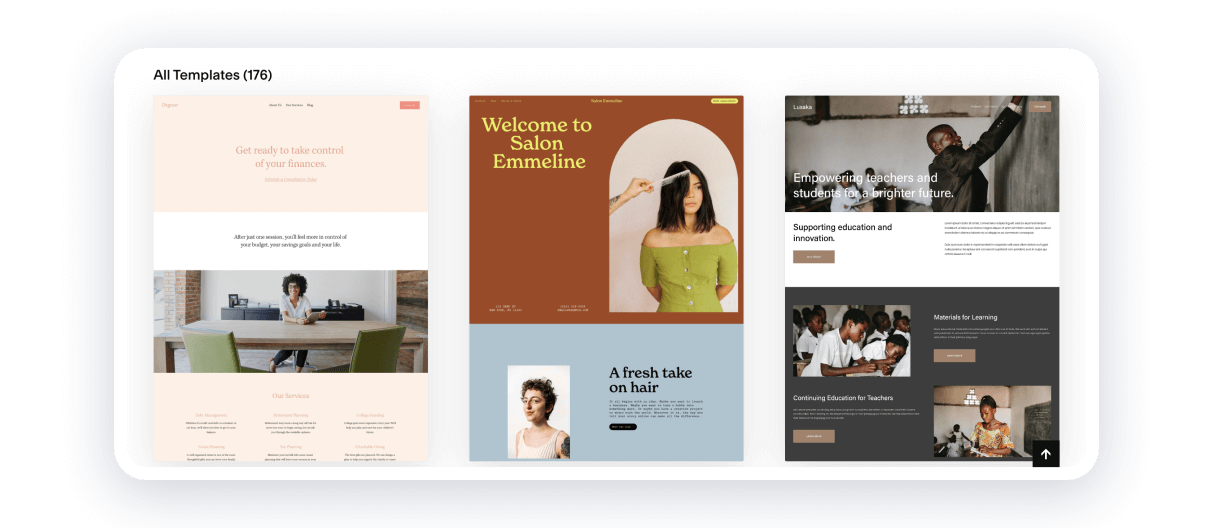
Squarespace is well known for its polished, visually consistent templates. It’s particularly appealing for photography, portfolios, creative businesses, and brands where imagery and presentation play a central role.
Its templates offer a strong design foundation, although the structured editing experience may not suit every project. The style editor is great: it allows you to modify almost every style component of your template. For example, you can:
- Fit a specific size for the page header
- Set the color scheme for the site
- Change logo height and font shape
- Configure the navigation menu and much more.
Weblium
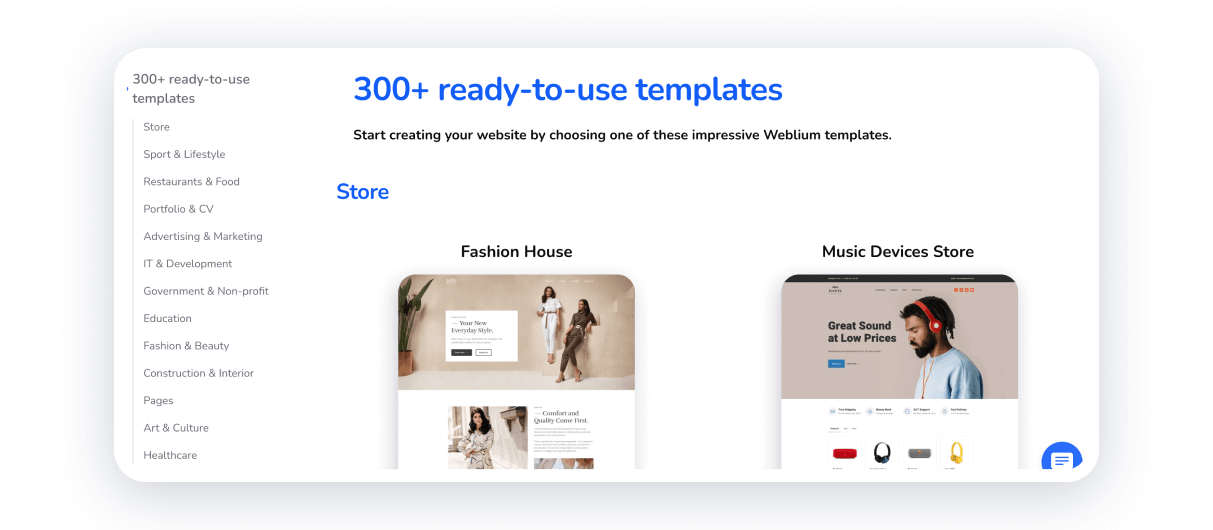
Weblium offers 350+ professionally designed templates for different industries and website types. You can start with a design that fits your business, then adjust the text, imagery, colors, fonts, and page sections.
A major advantage is that templates are designed to work well on mobile devices, reducing the amount of layout work needed before launch. Site-wide styling controls also help keep the design consistent.
Weblium is best for small-business owners who want a polished result without making every design decision from scratch. Check out Weblium templates to see if they fit your project.
Design verdict: Each platform takes a different approach to website design, from ease of customization to creative flexibility and visual presentation.
- Weblium is better if you want a professional template that’s easy to adapt and works well on mobile
- Wix works best for people who want extensive design freedom
- Squarespace is for rich visual brands and creative portfolios.
5. SEO: Which website builder is best for Google visibility?
A website builder can provide the tools for search engine optimization, but it can’t guarantee rankings. Your results also depend on your content, site structure, competition, performance, and the value your website offers visitors.
Wix
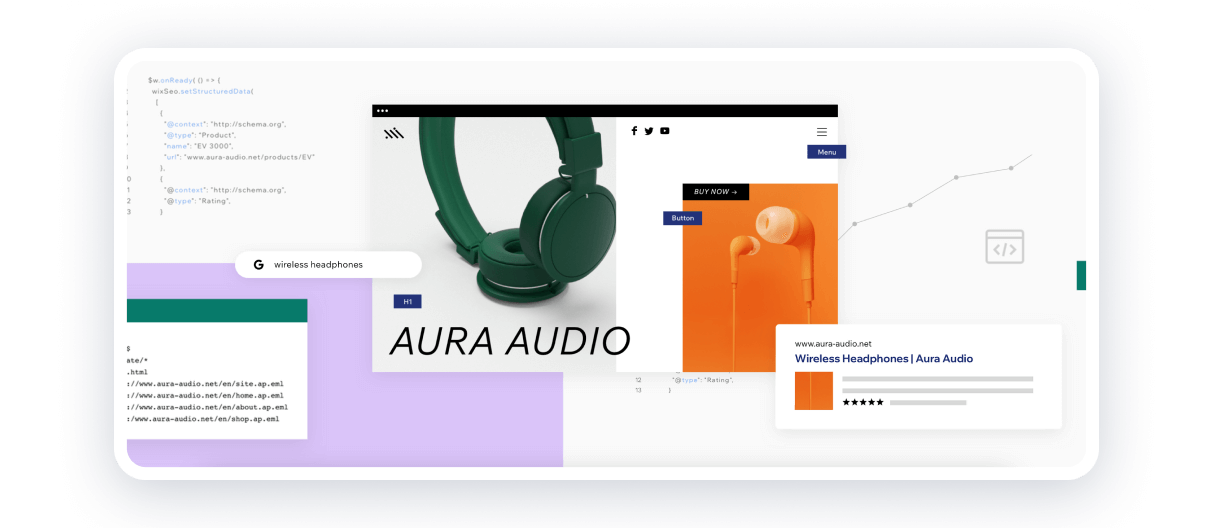
Wix offers a broad range of SEO tools, including guided setup, page-level settings, and integrations with other marketing tools. Its wider ecosystem can be helpful if your SEO workflow relies on additional apps or services.
Squarespace
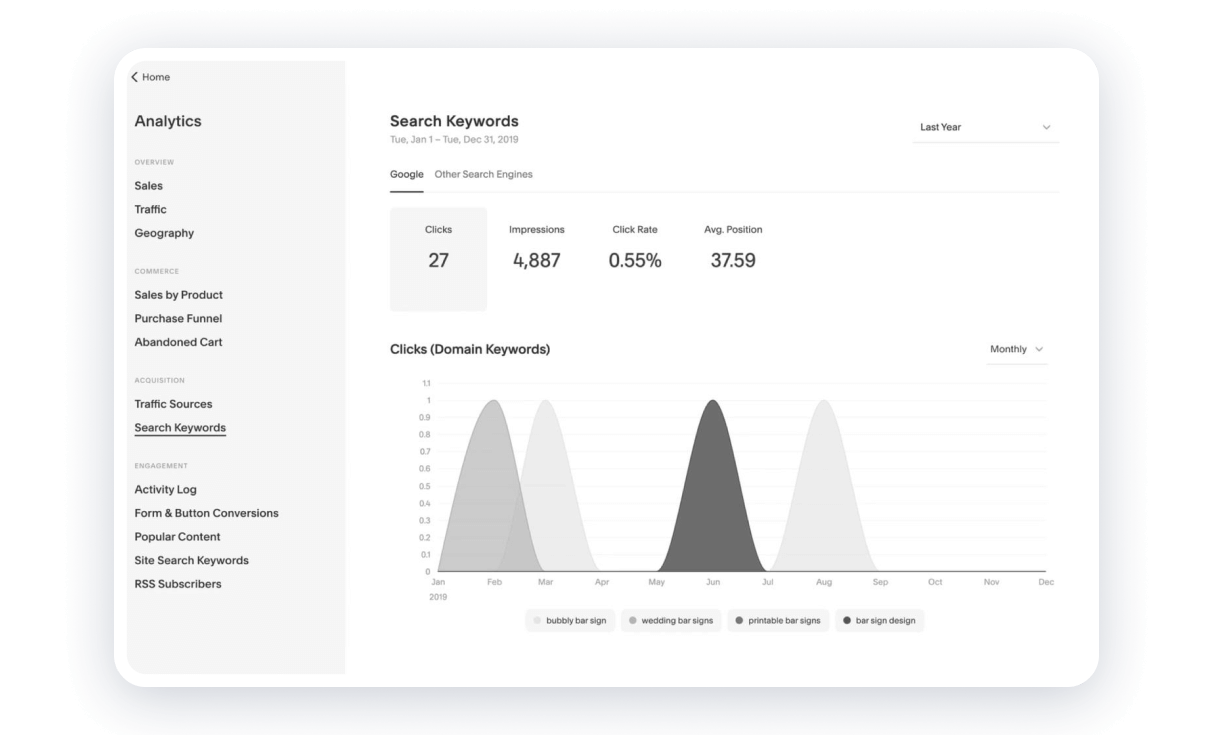
Squarespace includes built-in SEO settings and content-management tools. Its blogging features can help businesses publish and organize articles, while page settings support essential on-page optimization.
As with the other platforms, you’ll still need to create useful content and follow sound SEO practices.
Weblium
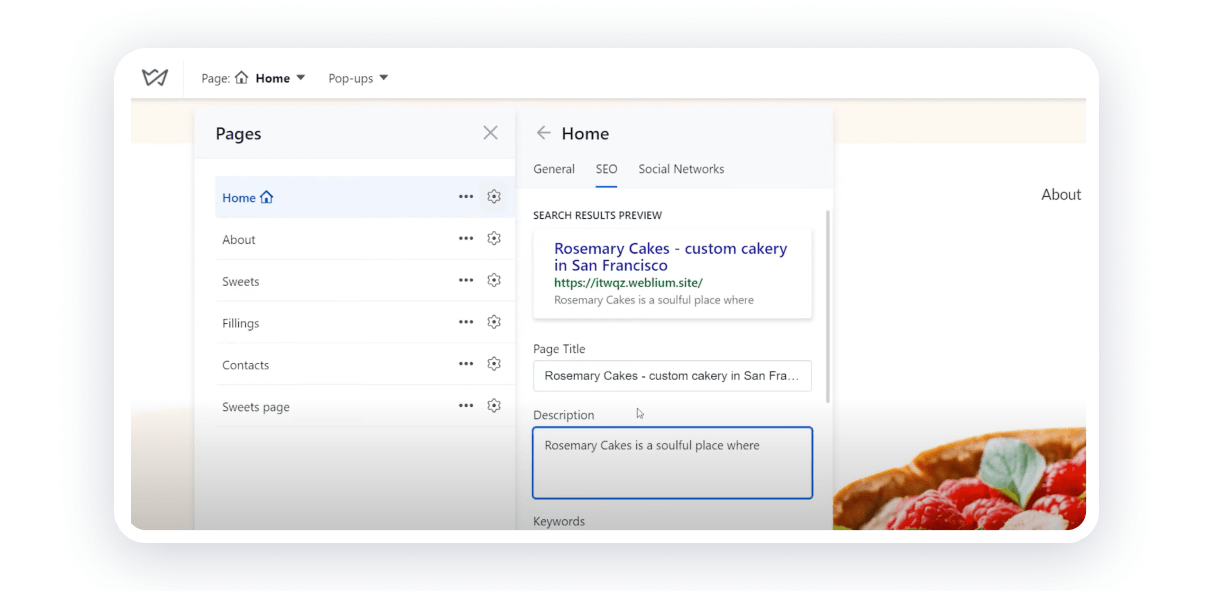
With Weblium’s Starter or Business plan, your website has initial built-in SEO settings so your site will get found on Google:
- Robots.txt and sitemap.xml files are automatically added
- As the website’s owner, you can set meta tags in the website’s main settings and change titles or descriptions for specific web pages in the editor
- You can add the canonical link element to prevent duplication of the site’s content
- As the website’s owner, you administer a search index
- Also, you can easily add Google Analytics to your website.
If you want to get higher ranks in Google, you can always use Weblium’s advanced SEO tools that will allow you to:
- Permit or forbid specific pages from search indexing
- Specify canonical links for web pages with duplicate content
- Set 302 redirects from other links.
SEO verdict: All three platforms can support a search-friendly website.
- Wix offers maximum flexibility through its wider ecosystem
- Squarespace is good for content-focused sites
- Weblium offers easy SEO and AI-assisted metadata settings.
Want to build your own website?
Put your ideas into practice. Follow our step-by-step guide to plan your pages, choose a design, and launch your website without coding.
6. Ecommerce: Which website builder is best for an online store?
If you plan to sell online, compare more than the ability to display products. You’ll also need to consider payment options, inventory management, shipping, order processing, transaction fees, and how easily you can manage your store.
Wix
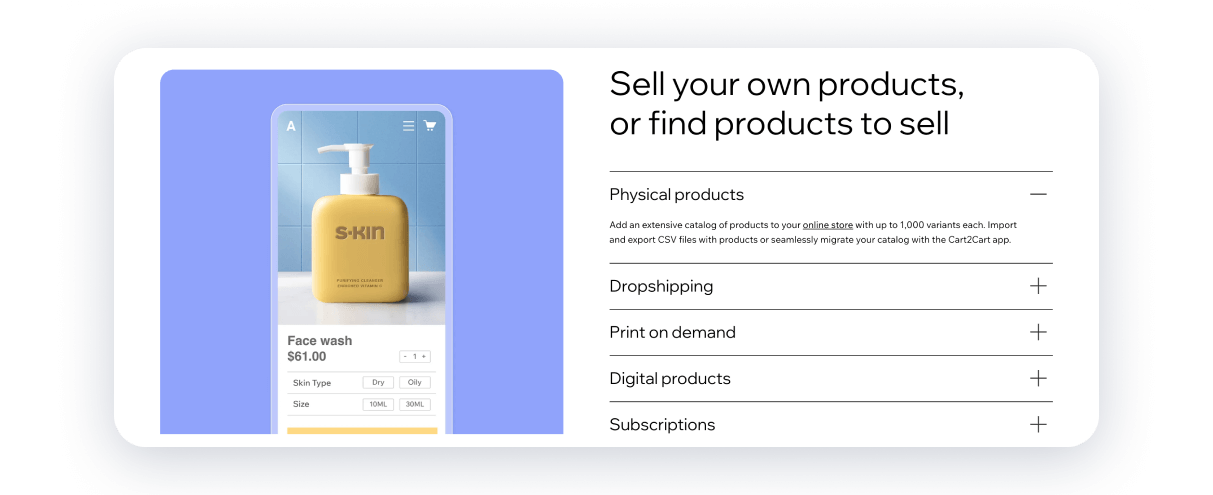
Wix offers ecommerce through eligible paid plans, with tools for product catalogs, payments, order management, and other business operations. Its App Market can extend the store with additional functionality.
This flexibility can make Wix a good fit for businesses with more specialized selling needs, although the final setup and cost depend on the features and apps you choose.
Wix has two plans created specifically for business. Both plans include the following features:
- 100 GB/unlimited storage space
- Customer accounts
- Site Booster application
- Up to 50,000 products
- Abandoned cart recovery.
Squarespace
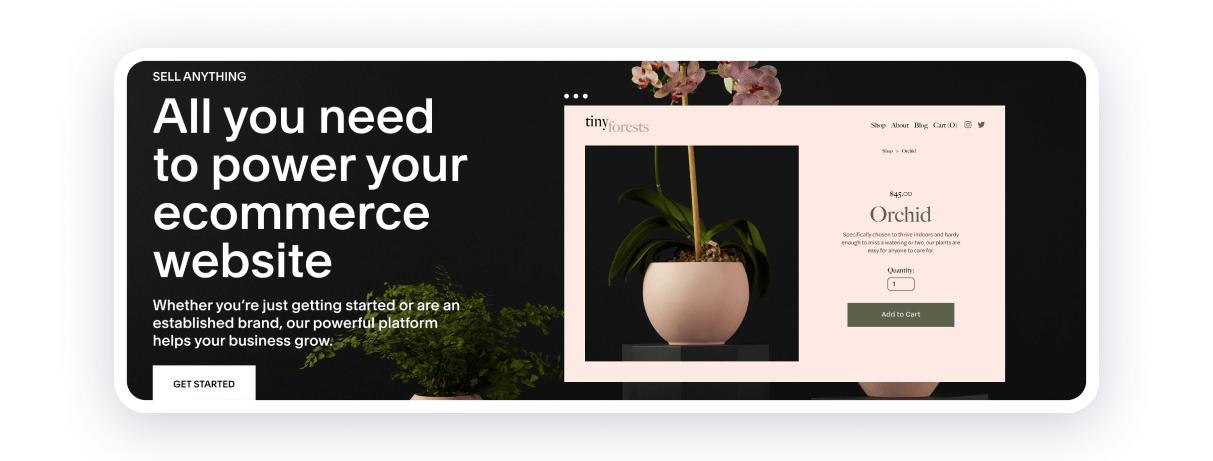
Squarespace includes selling tools across its paid plans, with features and transaction fees varying by subscription. It supports physical and digital products, services, and other ways to monetize content.
Its combination of store functionality and professional design makes it appealing to brands that want their product pages and overall website to feel visually consistent.
Weblium
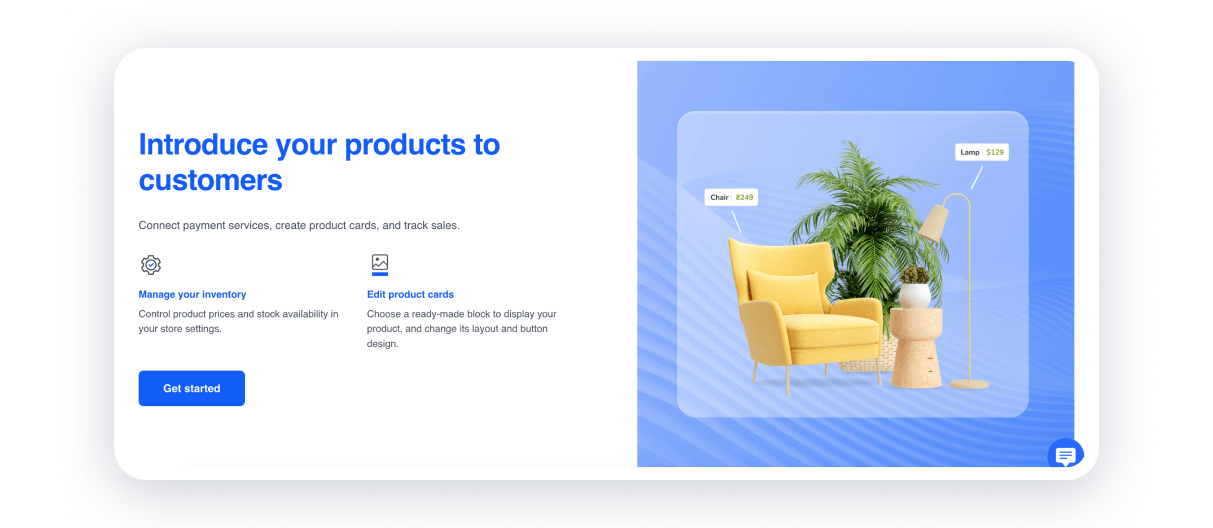
Weblium’s Business plan includes ecommerce functionality. You can easily create product pages, organize products, manage orders, and connect supported payment and shipping services. More features for online stores:
- All the products are collected in a single catalog so that you can add, edit, and remove products with just 2 clicks
- Up to 500 pages per site (or even more, limits can be increased on demand)
- Product pages comply with SEO standards and get indexed by Google and Bing
- Instant notifications about all new orders let you contact the clients immediately
- Sales automation: all orders and their statuses are in one place.
This is a great option for small businesses that want a website and online store within the same editor and without a complex setup.
Ecommerce verdict: Before choosing, compare each platform’s current payment methods, transaction fees, shipping options, and plan restrictions.
- Weblium is best for small and medium-sized businesses that need a straightforward online store
- Wix is a good option when you want more ways to extend your store through apps
- Squarespace works best for design-led shops and businesses that combine products with content.
7. Customer support: Who helps you when something goes wrong?
Support matters most when you’re stuck on a task that prevents you from publishing your website, accepting orders, or managing a client project.
Wix
Wix offers several ways to get help so you can choose the most convenient:
- Help Center
- Wix Encyclopedia
- Wix Learning Center
- Wix Forum.
Squarespace
Squarespace is quite serious about customer support:
- Help Center
- Webinars and videos
- Squarespace Forum
- Live Chat (during working hours in the USA).
Weblium
Weblium offers various ways to solve your problem as quickly as possible:
- Live Support via live chat (usually, it takes the experts up to 5 minutes to respond)
- Responses via messengers – Telegram, Messenger, Twitter
- Help Center (Knowledge Base)
- Video tutorials with step-by-step instructions
- Blogs and Guides — are two great extra sources of helpful information.
Support verdict: The three website builders offer different support options, so the best choice depends on how you prefer to get help and when you need it.
- Weblium stands out with 24/7 human support and a straightforward way to get help through live chat
- Wix provides customer support through its Help Center and customer care channels
- Squarespace’s live-chat availability is more limited by its published hours.
Exploring sites like Wix and Squarespace? Compare popular website builders to find the right balance of features, design flexibility, and pricing.
Weblium reviews: What do users say?
When comparing a less familiar platform with established brands, looking at independent feedback is a sensible step.
- G2: Weblium has a 4.8/5 rating based on 19 reviews. User feedback is generally about ease of use, the editor, and customer support.
- Trustpilot: Weblium has a 3.3/5 TrustScore based on 65 reviews.
These scores shouldn’t be treated as directly comparable: the platforms have different audiences, review volumes, and review patterns. Check out the latest Weblium reviews on G2 and Trustpilot.
If you’re searching for a Weblium review, look beyond the overall score. Read what users say about the features you plan to use, how support handled problems, and whether the platform fits the scale of their projects. It’s also worth reading Wix reviews and Squarespace reviews using the same criteria.
Comparing Wix vs Weblium vs Squarespace in a nutshell
|
Feature |
Weblium |
Wix |
Squarespace |
|
Pricing |
Free subscription with limits; paid plans for business needs |
Free plan and multiple paid tiers |
14-day trial; paid subscriptions |
|
Ease of use |
Focused, beginner-friendly editing experience |
Flexible editor with more tools to learn |
Professional design-led editor |
|
Functionality |
Core business features and popular integrations |
Broadest app ecosystem |
Strong integrated content and business tools |
|
Templates |
Professional templates and mobile-friendly layouts |
Large selection and extensive customization |
Advanced templates with a strong visual identity |
|
SEO |
Core and advanced on-page settings |
Broad built-in SEO toolkit |
Built-in SEO and content tools |
|
Ecommerce |
Business plan for online stores |
Eligible paid plans and app extensions |
Ecommerce features across paid plans |
|
Support |
24/7 live human support |
24/7 customer care |
Email support and live chat during working hours |
|
Best fit |
Small businesses, service providers, agencies |
Businesses needing flexibility and many integrations |
Creatives, portfolios, and content-led brands |
Which website builder should you choose?
There’s no single winner for every project. The best website builder for you depends on your priorities, the features you’ll use, and how much time you want to spend building and managing your website.
Choose Wix if:
- You want access to a large app ecosystem and many third-party integrations
- You need extensive customization or specialized business functionality
- You don’t mind spending more time learning the editor and comparing plan options
- You’re researching Wix pros and cons and want flexibility across a broad range of website types.
Choose Squarespace if:
- Visual presentation is a major priority for your brand
- You’re creating a portfolio, creative business website, or content-focused site
- You want integrated blogging and publishing tools alongside a polished design system.
Choose Weblium if:
- You want an intuitive editor and a straightforward website-building process
- You need a professional template and a mobile-friendly website without extensive manual adjustments
- You’re looking for the best website builder for small business projects such as service websites, landing pages, and straightforward online stores
- You value 24/7 human support and an uncomplicated website handover process for clients
- You’re comparing Weblium vs Wix and prefer a more focused editing experience over a large collection of apps.
Wix vs. Weblium vs. Weebly vs. Godaddy vs. WordPress: which one fits? Choosing between website builders doesn’t have to be complicated. Compare top-5 popular options side by side to understand their strengths and trade-offs before you get started.
FAQ
Which website builder is best: Weblium, Wix, or Squarespace?
It depends on what you’re building. Weblium is best for small businesses that want an intuitive editor, professional templates, and accessible human support. Wix is better for users who need a broad app ecosystem and extensive customization. And Squarespace is for visual brands, portfolios, and content-focused websites.
Is Weblium free?
Yes, Weblium offers a Weblium free plan with limitations and a trial of paid features. You can build a basic site within the free subscription’s limits, but features such as connecting a custom domain and accessing certain business tools require a paid plan.
Is Wix free?
Yes. Wix offers a Wix free plan that lets you build and publish a website with Wix branding and a Wix-branded address. A paid plan is needed for features such as connecting a custom domain and accessing certain business capabilities.
Is Squarespace free?
Squarespace doesn’t offer a permanent free plan. It has a 14-day free trial, after which you’ll need a paid subscription to continue using the website as a paid site.
Which website builder is cheapest?
The cheapest website builder option depends on whether you need a custom domain, ecommerce, or other paid features. Weblium and Wix offer free options with limitations, while Squarespace requires a paid subscription after its trial. Compare the plan that includes your required features, rather than just the entry-level price.
Which website builder is best for a small business?
Weblium is best for small businesses that need a professional website, lead-generation tools, mobile-friendly layouts, and human support. Wix can be a better fit if you rely on specialized apps or integrations. And Squarespace is for creative businesses that need the strongest design and content presentation.
Which website builder is best for SEO?
All three platforms provide tools for basic on-page SEO. Wix offers a broad SEO toolkit, Squarespace combines SEO settings with content-management features, and Weblium provides page-level SEO controls and advanced settings on paid plans. Rankings still depend on your content, technical setup, competition, and overall SEO strategy.
What are the main Wix limitations?
Potential Wix limitations include the time it can take to learn its editor, the cost of paid plans and third-party apps, and the need to verify that the platform supports your preferred integrations. These aren’t deal-breakers for everyone: Wix’s flexibility is also one of its main strengths.
Is Weblium the best Wix alternative?
Weblium can be a better option for small businesses, freelancers, and agencies that prioritize ease of use, professional templates, mobile-friendly design, and human support. If your project depends on a specific Wix app or advanced customization, check Weblium for an equivalent feature.
What are the best Weblium alternatives?
The best Weblium alternatives depend on your priorities. Wix offers a broad app ecosystem, while Squarespace is strong in visual design and blogging. Compare the platforms based on required features, total cost, ease of use, and support before getting started.